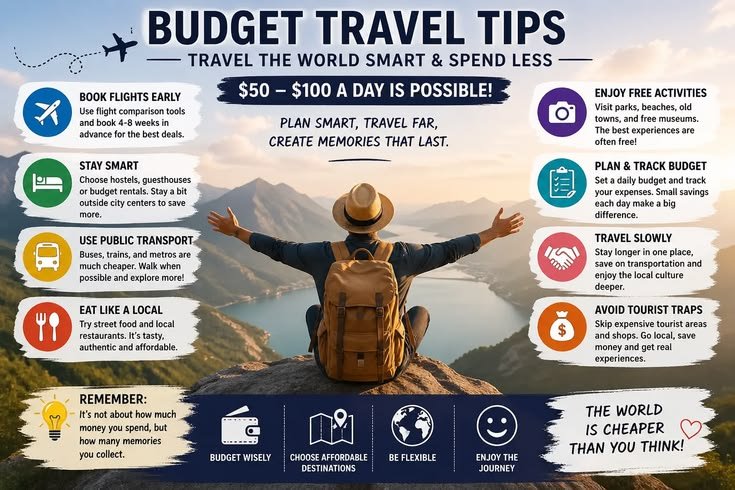


Traveling should be exciting, relaxing, and memorable. Whether you are planning a short city break, a family holiday, a romantic escape, or a long international adventure, the right preparation can make your journey much easier. A little planning before departure can help you avoid common problems, control your expenses, and spend more time enjoying your destination.
This guide covers practical travel tips that can help beginners and experienced travelers make their next vacation smoother and more enjoyable.
1. Start Planning Early
One of the simplest ways to reduce travel stress is to start planning early. Last-minute arrangements can sometimes be expensive and may leave you with limited choices.
Begin by deciding:
- Where you want to travel
- How long you want to stay
- Your approximate budget
- Your preferred travel dates
- The main attractions you want to visit
- Your accommodation preferences
Early planning gives you more time to compare transportation, hotels, activities, and other options.
However, planning early does not mean every detail needs to be fixed immediately. Keep your itinerary flexible so you can adjust it when necessary.
2. Set a Travel Budget
A clear budget is essential for a comfortable vacation.
Start by estimating your major expenses, including transportation and accommodation. Then calculate your expected daily spending on food, local transportation, sightseeing, entertainment, and shopping.
A useful budget can be divided into:
Transportation
Include flights, trains, buses, airport transfers, taxis, and rental vehicles.
Accommodation
Consider the nightly price as well as taxes, service charges, and additional fees.
Food
Estimate breakfast, lunch, dinner, snacks, and drinks.
Activities
Include entrance tickets, tours, museums, attractions, and recreational activities.
Emergency Fund
Keep additional money available for unexpected expenses.
Having a budget does not mean you cannot enjoy yourself. Instead, it helps you spend money intentionally.
3. Choose Your Destination Carefully
Not every destination is suitable for every type of traveler.
If you enjoy adventure, you might prefer mountains, national parks, hiking destinations, or outdoor activities. If you love history, consider cities known for museums, architecture, monuments, and cultural heritage.
Families may prefer destinations with convenient transportation, comfortable accommodation, and activities for different age groups.
Before booking, research the destination thoroughly. Look at weather conditions, local transportation, popular attractions, cultural expectations, and seasonal crowds.
4. Research the Weather
Weather can completely change a travel experience.
Before packing, check the typical and expected conditions for your travel dates. Consider more than temperature. Rain, wind, humidity, snow, and extreme heat can all affect your plans.
If your destination has unpredictable weather, pack layers and practical footwear.
A compact rain jacket or umbrella can also be useful even when rain is not expected every day.
5. Pack Light
Heavy luggage can make traveling unnecessarily difficult.
Instead of packing for every possible situation, focus on items you are likely to use.
Choose clothes that can be combined easily. Comfortable shoes are particularly important if you expect to walk frequently.
Before closing your suitcase, ask yourself whether every item is genuinely necessary.
Packing light can make airports, train stations, public transportation, and hotel changes much easier.
6. Keep Essential Items in Your Carry-On
If you are flying, important items should generally remain accessible rather than being placed in checked luggage.
Consider keeping essentials such as:
- Passport
- Travel documents
- Wallet
- Phone
- Chargers
- Necessary medication
- Valuable electronics
- Important booking information
This can be particularly helpful if checked baggage is delayed.
7. Make Copies of Important Documents
Losing travel documents can be stressful.
Keep secure digital copies of important documents such as your passport, travel insurance information, booking confirmations, and identification documents.
You can also keep physical copies separately from the originals.
The goal is to make important information accessible if something goes wrong.
8. Download Useful Travel Apps
Modern technology can make travel much easier.
Before leaving, consider downloading apps for:
- Maps
- Translation
- Currency conversion
- Airline or train bookings
- Accommodation
- Public transportation
- Weather
- Travel planning
Also download offline maps when available. Internet access may not always be reliable, particularly when traveling through rural areas or internationally.
9. Learn Basic Local Phrases
You do not need to become fluent in the local language before traveling.
Learning a few simple phrases such as greetings, thank you, please, yes, no, and basic questions can be extremely useful.
Even when locals speak another language, making an effort to communicate respectfully can create more positive interactions.
10. Understand Local Transportation
Before arriving, research how you will move around the destination.
Some cities have excellent public transportation, while others may be easier to explore by walking or using taxis.
Find out:
- Which transportation options are available
- How tickets are purchased
- Whether travel cards exist
- How much typical journeys cost
- Whether public transportation operates late
- How to reach your accommodation from the airport or station
Knowing these details beforehand can prevent confusion after arrival.
11. Do Not Overbook Your Vacation
A common mistake is creating an itinerary that is too busy.
You may want to visit ten attractions in two days, but rushing from one place to another can make the experience exhausting.
Instead, choose a few major activities each day and leave space for rest.
Remember that vacation time should not feel like a work schedule.
12. Explore Beyond Tourist Attractions
Famous landmarks are popular for a reason, but they are not the only places worth visiting.
Explore local neighborhoods, markets, cafés, parks, independent shops, and smaller cultural attractions.
These places can provide a different perspective on the destination.
Some of the best travel memories come from ordinary experiences rather than famous attractions.
13. Try Local Food
Food is an important part of understanding a destination.
Try traditional dishes and visit local restaurants when possible. Markets and food streets can also be excellent places to discover regional flavors.
If you have dietary restrictions, research suitable options before your trip and learn how to communicate your requirements.
Do not feel pressured to eat unfamiliar food if you are uncomfortable. Travel should be enjoyable and safe.
14. Make Restaurant Reservations When Necessary
Popular restaurants can become fully booked, especially during weekends, holidays, and peak travel seasons.
If there is a particular restaurant you strongly want to visit, research whether reservations are recommended.
For other meals, keeping your schedule flexible can be more enjoyable.
You may discover an excellent restaurant simply by exploring the area.
15. Protect Your Valuables
Basic awareness can reduce the risk of losing important belongings.
Avoid displaying large amounts of cash or expensive valuables unnecessarily.
Keep your phone, wallet, passport, and other important items secure, especially in crowded transportation areas and tourist locations.
A small crossbody bag or secure daypack can be useful for keeping essential belongings organized.
16. Be Careful With Public Wi-Fi
Public Wi-Fi can be convenient, but travelers should still think carefully about online security.
Avoid entering highly sensitive information on unfamiliar networks when possible. Keep your devices updated and use strong passwords.
If you need to access important accounts while traveling, use trusted connections whenever possible.
17. Stay Hydrated
Travel days can be tiring, particularly when you are walking for several hours or spending time outdoors.
Carry a reusable water bottle where practical and drink enough water throughout the day.
In hot climates, pay additional attention to hydration and take breaks from direct sunlight.
18. Give Yourself Rest Time
Travel can be physically demanding.
Long flights, early mornings, walking, sightseeing, and changing accommodations can quickly lead to exhaustion.
Schedule occasional breaks.
You do not have to visit an attraction every hour of every day. Sitting in a park, relaxing at a café, or spending an afternoon at your accommodation can be part of a great vacation.
19. Respect Local Customs
Every destination has its own traditions and expectations.
Research basic cultural practices before arriving.
Pay attention to appropriate clothing, photography rules, religious customs, tipping expectations, and public behavior.
Being respectful demonstrates appreciation for the destination and its people.
20. Keep an Emergency Contact List
Before leaving, prepare a small list of important contacts.
Depending on your trip, this may include:
- Your accommodation
- Transportation provider
- Travel insurance provider
- Family or friends
- Local emergency services
- Relevant embassy or consular contact
Keep the information somewhere accessible even if your phone battery runs out.
21. Take Travel Insurance Seriously
Travel insurance can provide protection against certain unexpected events, depending on the policy.
Coverage varies, so read the policy carefully before purchasing it.
Check what is included and what exclusions apply, particularly for medical treatment, cancellations, lost belongings, or travel disruptions.
Do not assume every policy provides the same protection.
22. Prepare for Flight Delays
Flight delays and cancellations can happen.
Keep essential items accessible and avoid making important plans too close to your expected arrival time.
If you have a connecting flight, allow enough time between connections when possible.
Keeping some snacks, water, entertainment, and charging equipment accessible can make unexpected waiting periods easier.
23. Keep Your Phone Charged
A phone can become one of your most useful travel tools.
It may contain your maps, tickets, hotel information, translation tools, payment applications, and communication services.
Carry a power bank when appropriate and charge your devices before leaving your accommodation.
24. Keep Your Itinerary Accessible Offline
Do not rely entirely on internet access.
Save important information offline, including:
- Accommodation address
- Booking confirmations
- Transportation tickets
- Maps
- Contact information
- Important instructions
This can be especially useful when arriving in a new country without mobile data.
25. Be Flexible When Things Go Wrong
Unexpected problems are part of travel.
A delayed train, closed attraction, rainy afternoon, or missed bus does not have to ruin your entire trip.
Try to think of alternatives rather than focusing only on the original plan.
If an outdoor activity is cancelled because of weather, perhaps visit a museum or explore a local market instead.
Flexibility can turn an inconvenience into an unexpected adventure.
26. Avoid Comparing Your Trip With Social Media
Social media often shows the most attractive moments of travel.
Pictures may not show crowds, long lines, bad weather, expensive transportation, or other less glamorous realities.
Do not judge your own trip against carefully selected online images.
Your vacation does not need to look perfect to be meaningful.
27. Travel Responsibly
Responsible tourism is increasingly important.
Try to support local businesses, reduce unnecessary waste, respect natural environments, and follow local rules.
When visiting natural attractions, avoid damaging plants, disturbing wildlife, or leaving rubbish behind.
Small responsible choices can contribute to healthier destinations for future travelers.
28. Keep a Travel Journal
Consider recording your experiences during your trip.
You can write down places you visited, foods you tried, interesting people you met, and memorable moments.
You do not need to write pages every day. A few sentences can be enough.
Years later, these notes can help you remember details that photographs may not capture.
29. Take Photos, But Enjoy the Moment
Photography is a wonderful way to preserve travel memories.
However, try not to spend your entire vacation behind a phone or camera screen.
Take the photograph and then experience the moment.
Watch the sunset, listen to the sounds around you, enjoy the food, and appreciate the environment.
Some memories are better experienced than photographed.
30. Build Your Own Travel Style
There is no single correct way to travel.
Some people love detailed itineraries. Others prefer spontaneous adventures.
Some travelers prefer luxury hotels, while others enjoy budget accommodation. Some want to visit famous landmarks, while others prefer quiet neighborhoods.
The best travel style is the one that fits your personality, budget, and interests.
Conclusion
A stress-free vacation does not require a perfect itinerary. It requires preparation, flexibility, realistic expectations, and a willingness to enjoy the journey.
Plan your budget, research your destination, prepare your documents, pack carefully, understand local transportation, and protect your important belongings. At the same time, leave space for spontaneous experiences and relaxation.
Travel is about more than reaching a destination. It is about discovering new places, experiencing different cultures, meeting people, trying new foods, and creating memories.
With thoughtful preparation and an open mind, your next adventure can become an experience you remember for years to come.